
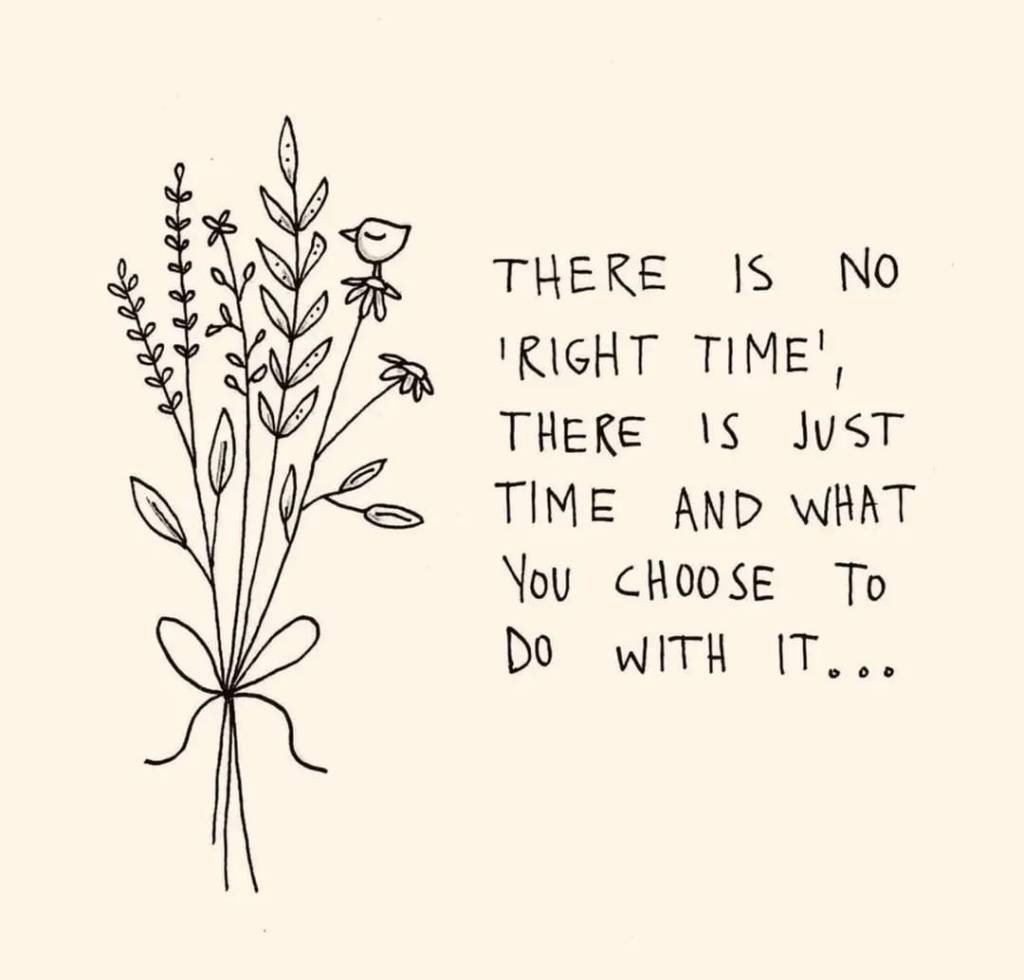
I have waited for the right time more often than I can count.
The right time to speak.
The right time to reach out.
The right time to say, this is how I feel about you.
So many moments of my life were spent holding something precious inside me—something tender, fragile, and alive—because I was afraid that expressing it might feel like a burden to the person standing on the other side. I told myself I was being considerate, mature, emotionally intelligent. I believed silence was kindness.
But silence, I have learned, is often just fear dressed as patience.
There were days when love sat heavy in my chest, pressing against my ribs, asking to be seen. I felt it in the way I smiled at my phone, in the pauses between conversations, in the warmth that lingered long after a meeting ended. Yet I waited. I waited because I thought timing was everything. Because I thought love needed the perfect moment, the perfect mood, the perfect readiness.
And what I didn’t realize then was this: love doesn’t bloom in perfection—it breathes in honesty.
We all grow up believing on the invisible checkpoint called the right time. Society feeds us this idea gently, almost lovingly: Don’t rush. Wait until things are stable. Wait until the situation improves. Wait until you are sure.
So we wait.
My friends do it too. I hear it in their voices when they say, “When the right time comes, I’ll tell them.”
I see it in their eyes when they talk about someone they once loved, someone they never quite reached.
And years later, that sentence changes shape. It becomes quieter & heavier……
“I should have said something.”
“I don’t know why I waited.”
“Now it’s too late.”
The right time never arrives because time is not a guest that knocks. It doesn’t pause. It doesn’t check if we are emotionally prepared. Time flows—indifferent, relentless, free. And when we try to control it, we lose it.
I understand why we hold back. I’ve lived there.
There’s a strange comfort in silence. A cocoon we build around ourselves, woven from “what ifs” and “maybe laters.” Inside it, we feel protected. We convince ourselves that not expressing love keeps us safe from rejection, misunderstanding, or vulnerability.
Here’s the realization that changed everything for me: feeling loved is deeply connected to expressing love.
Not just receiving it. Not just waiting for someone else to make the first move. But allowing ourselves to step into the open, imperfect act of expression.
Love is not only about grand confessions. Sometimes it’s a message sent without overthinking. Sometimes it’s a touch that lingers a second longer. Sometimes it’s choosing presence instead of restraint.
When I finally allowed myself to express what I felt—without scripting the outcome—I felt lighter. Not because the response was always what I hoped for, but because I was no longer betraying myself.
Expression is liberation.
My suggestion is always : Do things when feelings are alive:
There is a quiet magic in acting when the feeling is alive.
When you tell someone you miss them while the longing is warm.
When you hold a hand before doubt enters the room.
When you say I care without calculating consequences.
Life offers us free space every single day. Small windows, soft openings and when we flow with them instead of postponing ourselves, something shifts.
We feel more present.
More honest.
More alive.
As waiting drains energy & expression restores it
I no longer wait for the right time—I listen to the moment,
Honouring each feeling as it rises, unedited and true.
Honesty, I’ve learned, that carrying it has its own quiet clock,
And love was never meant for storage, only for living now.
Life opens its doors to those who show up, trembling but present,
So feel it, speak it—this moment is already yours


 Molika's Blog
Leave a reply to Abhishek Patel Cancel reply