
I am sure, most of us will either lower our voice, our eyes and get an image in mind when ever the word Kamasutra is mentioned. Even the most modern minds will immediately rush toward a narrow, sensational image—explicit positions, erotic indulgence, or taboo pleasure. This reductionist view has done a deep injustice to one of India’s most misunderstood classical texts.
Let me today try to put forthe my viewpoint about this book : The Kamasutra, written by Vatsyayana around the 3rd–4th century CE, it is not a manual of excess. It is a sophisticated philosophical collection of aspects of life on how to live a balanced, meaningful, and conscious life, where desire (Kama) is understood, honoured, and integrated—never suppressed, never allowed to dominate.
As we live in today’s emotionally fragmented, hyper-stimulated world, the Kamasutra is perhaps more relevant than ever.
One of the greatest myths surrounding the Kamasutra is that it is merely a catalogue of sexual techniques. In reality, only about 20% of the text speaks about physical intimacy. The remaining chapters explore:
- Emotional connection between partners
- Courtship and attraction
- Communication and mutual respect
- Roles of men and women in relationships
- Household harmony
- Ethics of desire
- Social responsibility
Ancient Indian temple sculptures—like those at Khajuraho Temples or Konark Sun Temple—were never meant to provoke lust. They were visual metaphors reminding humans that life energy flows through desire, and denying it creates imbalance.
Intimacy was never hidden. It was contextualized.
To better understand Kamasutra, one must understand Indian life philosophy. Human life was designed around four Purusharthas:
- Dharma – righteous living
- Artha – material stability
- Kama – pleasure and desire
- Moksha – liberation
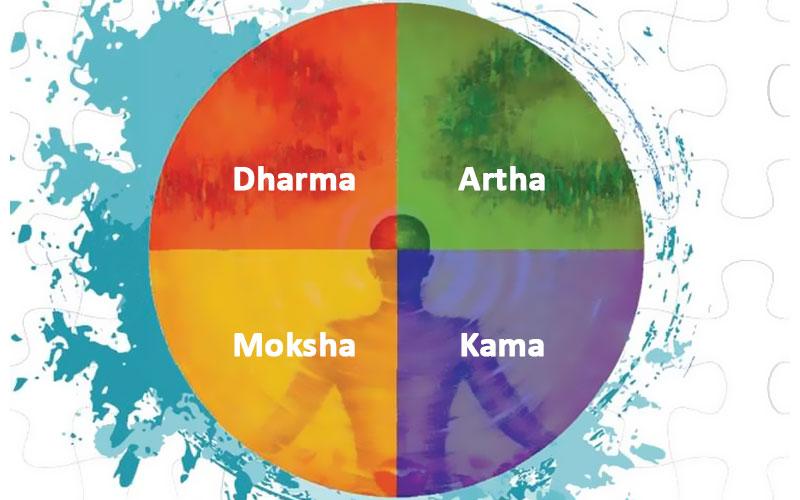
The problem today is not desire—it is disconnected desire. We chase pleasure without ethics, intimacy without presence, and relationships without responsibility.
When I read the book , what I felt was that the Kamasutra teaches that Kama must be lived in alignment with Dharma and Artha, only then can it eventually lead toward Moksha. Pleasure is not the enemy of spirituality; unconscious pleasure is.
Contrary to popular belief, the Kamasutra is deeply relational. It emphasizes:
- Consent before intimacy
- Understanding a partner’s emotional rhythms
- Timing, mood, and mental state
- Respect for individuality
- Equality in pleasure
In an era of dating apps, ghosting, and emotional burnout, these teachings feel almost revolutionary. The text in the book, encourages partners to listen, observe, and adapt, not perform. Modern relationships often fail not because of lack of love—but due to lack of presence.
At its deepest level, the Kamasutra aligns with Tantric philosophy, where physical union is a gateway—not a destination. In Tantra, the union of lovers mirrors the cosmic union of Shiva and Shakti—stillness meeting energy, consciousness meeting creation.
When intimacy is conscious:
- Breath slows
- Ego dissolves
- Time disappears
- Presence deepens
This is not indulgence. This is meditation through love.
Why Modern Life Needs Kamasutra Wisdom?
Today, we live in a paradox:
- More sexual freedom, less emotional fulfillment
- More communication tools, less real communication
- More relationships, deeper loneliness
Whereas the Kamasutra reminds us that intimacy is an art, not an instinct alone. It must be cultivated—like music, like yoga, like meditation.
It asks profound questions:
- Are you present with your partner—or distracted?
- Do you seek connection—or validation?
- Are you sharing energy—or consuming it?
These are spiritual questions, disguised as relational ones.
Ultimately, we can say that the Kamasutra is not about the body—it is about awareness
When desire is observed rather than suppressed, it becomes wisdom. When intimacy is conscious, it becomes prayer.
Perhaps the real question is not:
“Is Kamasutra relevant today?”
But rather:
Are we ready to approach pleasure with responsibility, intimacy with awareness, and love with reverence?
Because when lived rightly, Kama does not pull us away from spirituality—it leads us toward it
I would hereby like to summarise the same witha beautiful verse from the Kamasutra :
Not by excess is union known,
Nor by denial is peace attained.
Between hunger and renunciation
walks the path of harmony.Where the mind is restless,
Desire becomes noise.
Where the heart is attentive,
Desire turns sacred.Let touch arise from presence,
Not from haste or conquest.
Let pleasure be shared as breath,
Flowing, received, returned.He who grasps without awareness
Is bound by longing.
She who yields without choice
Is bound by absence.
But where two meet in knowing,
Bondage loosens its hold.Thus Kama, when guided by Dharma,
Becomes neither indulgence nor fear.
It becomes a mirror
In which the self is seen whole.This is not the teaching of postures,
But of balance.
Not of desire alone,
But of the art of living.


Leave a Reply