
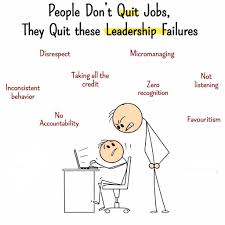
I have failed many a times in life, but this story has always lead me to introspection and improvement, sometime I succeed, and sometimes I again fail, but I try to not repeat.
Ship One: The Over-Present Captain
The moment I stepped toward the ship, the Captain was at the gate.
Smiling. Welcoming. Warm.
He checked my boarding pass himself. Carried my luggage. Walked me through the hallway. Spoke gently about the weather, the sea, the future of the voyage. When I entered my cabin, he was inside — changing the sheets.
I felt important. Valued. Special.
When I called for room service, he arrived personally. When service was delayed, he apologized personally. Every inconvenience — he handled. Every touchpoint — he managed.
I began to think: What a committed leader.
The ship sailed smoothly.
Until one night — a loud crack.
An iceberg.
The Captain ran through the corridors shouting instructions. He directed us to the lifeboats. Chaos. Fear. Screams.
The ship was sinking.
I somehow reached a lifeboat — breathless, trembling.
And there he was.
The Captain.
Sitting in my lifeboat.
Behind us, hundreds were still struggling. The ship disappeared beneath the dark water.
And I wondered:
How could someone who did everything fail at the one thing that mattered most — steering the ship safely?
He was everywhere… except where he was truly needed.
Ship Two: The Structured Captain
On the second voyage, the Captain greeted me briefly.
Not over-friendly. Not distant.
Just present.
After that, the crew took over. Check-in was smooth. My luggage reached my room. Questions were answered efficiently. If I had an issue, a team member resolved it. I rarely saw the Captain — but I felt his system everywhere.
The ship moved confidently.
Then one evening — a sharp vibration.
An iceberg again.
But this time, an announcement echoed through the speakers:
Clear. Calm. Precise.
“This is your Captain speaking. Please proceed to lifeboat stations A, B, and C. Crew members will assist.”
There was no chaos. No confusion.
We evacuated safely.
The last thing I heard was that the Captain had stayed behind ensuring evacuation protocols were complete.
He did not survive.
But no passenger was lost.
That night, floating safely away from the wreckage, I understood something:
Leadership is not about being seen everywhere.
It is about building a system that works when you are not there.
Ship Three: The Absent Captain
On the third ship, no one greeted me.
I stood confused. No direction boards. No assistance.
I asked one crew member — he pointed somewhere vaguely.
Another was busy with paperwork.
Another was arguing over something irrelevant.
Frustration grew.
I shouted. No response.
Finally, I stormed toward the Captain’s cabin and pushed the door open.
He was inside — staring at a laptop. Surrounded by reports. Graphs. Numbers.
The ship moved… but no one seemed to be steering it.
Then I saw it — through the window.
An iceberg.
“Captain!” I yelled.
He waved dismissively. “We are analyzing performance reports.”
The crash was inevitable.
Water rushed in.
And before panic even peaked, the Captain and his core team were already lowering their private lifeboat. Laptops in hand. Spreadsheets open.
From a safe distance, I watched them drafting evacuation strategies — while the ship and its passengers sank.
That was the moment anger turned into clarity.
This was not incompetence.
This was negligence disguised as management.
The Mirror
Three ships.
Three captains.
Three outcomes.
And then a voice inside me asked:
Which ship am I building?
Am I the Captain who does everything personally — but forgets to steer?
Am I the Captain who builds systems, prepares for icebergs, and protects the passengers even at personal cost?
Or am I the Captain buried in reports, detached from reality, escaping when crisis comes?
Icebergs are inevitable — in business, in life, in relationships.
The question is not whether they exist.
The question is:
- Did I see them early?
- Did I build systems to avoid them?
- Did I train my crew?
- Did I prioritize the passengers?
- Or did I protect myself first?
Outcomes are defined by leadership long before impact happens.
A ship does not sink because of the iceberg alone.
It sinks because someone failed to anticipate, prepare, or act.
So today I ask myself —
Am I steering?
Or am I just busy?
Because when we are not reaching the destination safely…
When we are not pre-empting icebergs…
When customers are drowning while we sit in lifeboats…
We are not good captains.
And the sea never forgives poor leadership.
Introspect today.
 Molika's Blog
Leave a comment