
Can we actually learn the balance?
Whenever something happens unexpected or unplanned in our life’s we feel our life is a mess… but is it actually a mess ?
I have always felt that life is like a blank canvas, it is simply waiting for us to paint our experiences onto it. It’s a journey with happy, sad, triumphant, and defeating moments. But how do we interpret these encounters? Do we tend to overanalyze things and attribute disorder where order may exist, or are they naturally chaotic?
As soon as we wake up, we are bombarded with choices, information, and expectations. One of the most commonly asked for choices are, what do you wish to eat today? 🙂 , the list of chores that need our attention, the information pouring from our family members or a friend who is just dying to express as he/she held up whole night waiting us to just wake up and go online etc. When we know that this is just a routine and we need to do it day in and day out then why do we feel pressurized by the same. As what’s going inside us, is not visible like a sign board – red/yellow/green to others around us.
By definition, routines entail predictability and repetition. On the other hand, when routines are overly inflexible or don’t account for life’s unpredictability’s, chaos may appear. On the other hand when unforeseen circumstances arise and upset the timetable, this rigidity can lead to stress and make life seem chaotic even though there is a regularity underneath it all.
It is simple to perceive life as a disorganized mess, particularly when confronted with unforeseen obstacles/shifts or change. Life’s unpredictable nature can be debilitating, and many people come to believe that life is disorderly in general. This viewpoint can originate from individual experiences, social pressures, or even cultural narratives that place a strong emphasis on struggle and hardship.
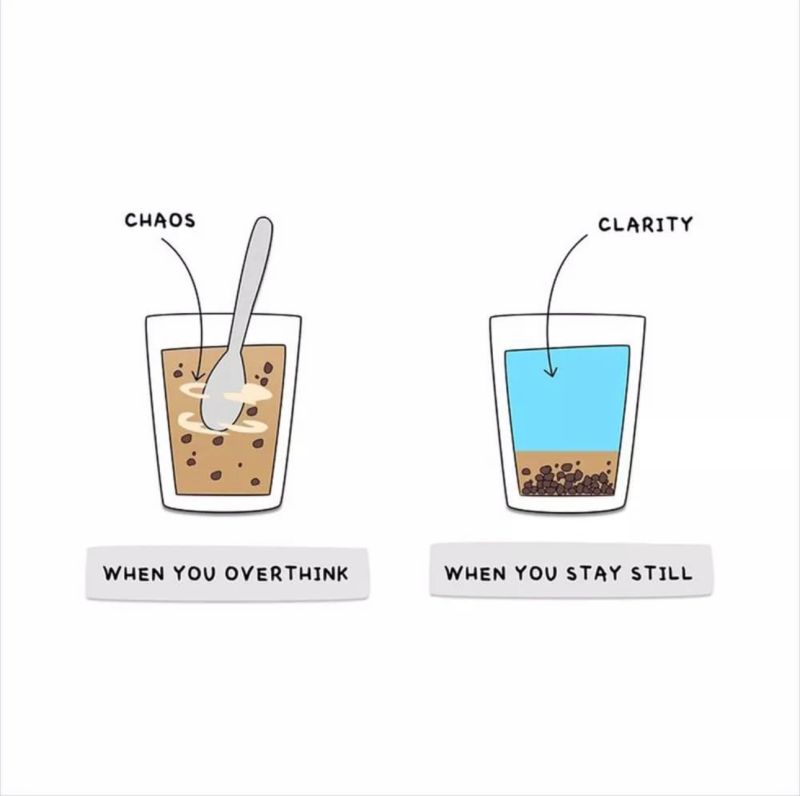
But there’s also another way to look at life, which is as something we tend to overthink rather than as a mess. Our brains are strong instruments that can transform straightforward circumstances into intricate ones. We often overthink things, fear about the consequences, and second-guess ourselves, which complicates situations that could otherwise be simple. Overanalyzing can impair our judgment and make things appear more complicated than they actually are.
It is essential to discern between true chaos and problems resulting from overthinking. Whether we view life as a disaster or just accept that we occasionally overthink depends on how we react to these situations. I have learnt through experiences that it is always possible to negotiate life’s difficulties with grace and resilience if we embrace the unexpected, practice mindfulness, and seek balance. Adding flexibility to our daily schedules is crucial to preventing the sense of turmoil that comes with routines. This can entail scheduling time for unforeseen events, educating oneself, and introspection in addition to being flexible enough to adjust our plans as needed. We can develop a mindset that emphasizes spontaneity and adaptation by adopting a “chaos routine,” which lessens the apparent chaos when dealing with the unexpected.
The question that arises here is, Is there be a point at which routines should be completely abandoned to embrace chaos?
Even though routines give stability, there are times when following them to the latter can stifle innovation and growth. The choice to give up routines in favor of embracing chaos is influenced by a number of variables, such as the person’s objectives, the type of routine, and the possible advantages of adding diversity to one’s life.
I always felt that whenever I have worked on embracing chaos, I felt increase in stress levels and anxiety. I am well aware when I feel overwhelmed to take any action or decision in such scenarios , when I did a deep analysis of the same I realized that, as I value consistency & predictability it makes me feel confused and disordered when I am in process to embrace chaos.
Due to continuous exposure to chaotic environments without adequate support or coping mechanisms I feel increase in risk of burnout & decrease in productivity in both personal & professional spheres. When I did a why-why analysis from a practical viewpoint the answer lied in the problem itself. If we have adequate emotional support or a set of people who are our “Go-To” people we can derive our own coping mechanism to approach and manage both chaos & overthinking.
 Molika's Blog
Leave a comment